Showing posts with label Questions. Show all posts

Thursday, April 10, 2014

Essential Questions

One of the early steps in successful project-based learning is for students to develop essential questions. Somewhere in the misty regions of their interests and passions, familiar topics, recent learning, and often the complete unknown, an essential question takes shape to guide inquiry and project work.

There are many variations on what makes a good essential question; here are some guidelines being used by students in a "Middle Earth 12" class at D.P. Todd in Prince George:
  1. an essential question should spark the imagination 
  2. an essential question introduces a problem that has a means of being solved 
  3. an essential question has depth -- dimension and significance 
  4. an essential question pushes thinking, creativity, and authentic inquiry
  5. an essential question is broad enough to make connections between diverse fields, but still has a recognizable focus 
Middle Earth 12 is a senior Humanities course exploring society, history, language, and landscape by going in-between real and imagined worlds.  Here are some of the essential questions that the students in Middle Earth 12 are using for their first of two attempts at project-based learning:
  • Can the use of creative writing and visual arts be used to understand and empathize with daily life in a medieval village?
  • Why does the legacy of medieval mythology passed down to modern times leave us with the sense that dragons could be real?
  • How did the design and construction of castles satisfy the social needs and engineering talents of past societies?
  • How and why have monsters such as werewolves developed in modern literature and cinema?
  • How has the character and moral purpose of Robin Hood evolved over time to fit modern society and new audiences?
  • What do the Spartan, Aztec, and Ancient Chinese cultures have in common regarding the social impact of weapons, armour, and warfare?
  • What has been the purpose of calligraphy and related forms of graphic expression in past societies and how has this changed?
  • What part of the classic mythological record of Hercules is reflected in modern versions of the story such as Disney's "Hercules?"
  • How have various past societies and cultures been shaped by military strategy and weapons technology?
  • What patterns are in place in the lore and creation of Dark Souls characters such as Havel the Rock?
  • What purpose do the Asgardian Weapons have within Norse Mythology?
  • How and why do fictitious "cryptozoological" creatures come into the stories of past European and First Nations cultures?
One might notice a recurring theme here of medievalism and fantasy worlds (this is what drew many of the students towards the course), but there is also an undercurrent of critical inquiry -- applying concepts such as the benchmarks of historical thinking. The students are now involved in the next steps of PBL: asking more questions, planning their research, developing a system for organizing their learning, and putting some thought into the construction and presentation of their inquiry projects.


Tuesday, December 3, 2013

Scaffolding Project Based Learning

Ladder by Christop

Ladder, a photo by Christop on Flickr.
I always enjoy open, honest dialog about Teaching Practice. The best conversations are the ones built on a relationship of trust, when we can begin to ask probing questions of one another and share personal reflections on practice. Recently I have had the privilege of coming alongside colleagues who are exploring and implementing Project Based Learning. We've enjoyed sharing in the successes of the journey, and also in the lessons learned.

A few themes have emerged in my conversations, all focused on scaffolding the Project Based Learning experience both for the Teacher and the Student. Teachers shifting toward student-centered approaches commonly wonder about assessing projects, about structuring projects, about building competencies, and about academic rigor. There are two things I really enjoy about these conversations. First, we're all in it together. These same questions seem to come up again and again, underscoring their importance. Secondly, I appreciate the position from which these questions are asked. Teachers asking these questions are interested in and motivated to push their practice to increase student engagement, motivation, and success. I feel strongly that we need to continue to share our wonderings and to share our strategies for implementing methods of Student Inquiry.

In general terms I think we'll all agree we need to implement new systems one step at a time. If the change feels significant for us as the classroom Teacher, its definitely a change that needs to be carefully introduced to our students. One article that stands out in my mind to help us scaffold the learner experience is Ertmer and Simons' "Scaffolding Teacher Efforts to Impliment Problem Based Learning". Do their suggestions resonate with you? What scaffolds have accompanied your shifts in instruction and assessment? What do you want to know more about as you explore Student Inquiry and Project Based Learning? What specific questions do you have?

Tuesday, November 19, 2013

PBL Learning Team - First Meeting

Wordle: Questions about Project Based Learning

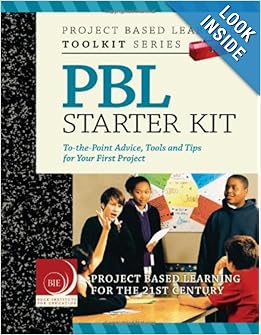
A group of Teachers met today at Kelly Road to discuss Project Based Learning. We've ordered BIE's PBL Starter Kit as a resources and will be working through that together as a way to inform and evaluate our practice. We've also started a blog dedicated exclusively to the group. Its online here.

One of the things we did was share our questions. Here's what we came up with:
  • What questions do we have? 
  • How does PBL work? 
  • How does PBL benefit our students? 
    • motivation 
    • engagement 
    • success 
  • building core competencies (thinking, communicating, personal and social competency) 
  • Definition of “The Educated Citizen” (we heard this recently and understand its in the BC school regulations, but do not know where) 
    • literacy and numeracy foundations 
    • understanding rich content 
    • core competencies 
  • How do we cover curriculum through PBL? 
  • What is “true PBL”, is there “true PBL”? 
  • How much information is required before students jump in? 
  • How much Teacher Direction/ Guidance is needed? 
  • How do we facilitate and let students drive? 
  • What role do driving questions play? 
  • How do we come up with really good driving questions? 
  • What skills and experiences do students bring to projects? 
  • How do different disciplines come together in projects? 
We agreed its the highlighted questions that matter most. Its the difference this way of learning makes in the lives of our students that matters most. We want to be intentional about evaluating our practice based on the difference it makes for students. We are excited to be learning together!

What questions do you have about PBL?

Monday, November 18, 2013

Learning Team using PBL Starter Kit

http://www.amazon.com/gp/product/0974034320?ie=UTF8&camp=213733&creative=393177&creativeASIN=0974034320&linkCode=shr&tag=learisgrow-20&qid=1381244997&sr=8-3&keywords=project+based+learning
One of the School District 57 Learning Teams going on this year is a Project Based Learning (PBL) group. We are meeting with this vision:
We want to meet together and work through a resource that will allow for open conversations with all teachers regardless of pedagogy or familiarity with PBL. We would also take time to share our own experiences, strategies and ideas regarding PBL and collaborate. We hope to grow our professional understanding of PBL and our ability to implement it in our classrooms. (see full proposal here)
As a way of sharing our learning we will be using a PBLStarterKit label on this blog and a #PBLStarterKit hashtag on Twitter. Please join the conversation!

There are a couple of things I would like to do as we kick off the Learning Team. One is to share our own experience with Project Based Learning. Another is to create a group inquiry question. Finally, we could share the questions we personally hope to have answered by the book and our time together.

What are your experiences with PBL?
What are your questions about PBL?

Project Based Learning. What? Why? How?

Recently I was able to spend a day with SD57 colleauges in McBride learning about Project Based Learning. I packed this Prezi full of links and examples of projects and we discussed BIE's 8 elements of PBL throughout the day.


I gained inspiration for the presentation by the work of Larry Rosenstock and David Truss. Their questions and prompts started some rich conversations. I'll ask the same questions here. We look forward to hearing your thoughts and experiences.
  • Q1. Describe a memorable learning experience from your elementary or secondary school years.
  • Q2. How can we set students up to be curious and motivated?
  • Q3. How can we create opportunities for students to be engaged in deep learning?
  • Q4. What can we do to increase the audience of our students work?